

verified: true
TL;DR
- Tokenized private credit is expanding the real-world asset narrative beyond sovereign treasuries to higher-yield corporate debt.
- Protocols utilizing structured tranches allow investors to select their preferred risk profile while providing capital to emerging market businesses.
- Quantitative funds leverage on-chain credit markets to diversify portfolios and secure yields decoupled from cryptocurrency volatility.
- Default risks require rigorous off-chain legal frameworks to enforce asset seizure and protect decentralized capital providers.
The Evolution of Real-World Assets
The integration of real-world assets into decentralized finance initially focused on low-risk instruments. Tokenized US Treasuries served as a proof-of-concept, offering digital asset investors a stable, risk-free rate on-chain. The sector is now advancing into more complex financial products. Tokenized private credit represents a massive addressable market, moving corporate debt, trade finance, and real estate bridging loans onto blockchain architecture.
Private credit is traditionally an opaque, illiquid asset class restricted to institutional investors. Tokenization fragments these massive debt facilities into standardized, easily transferable tokens. This process democratizes access, allowing decentralized autonomous organizations and retail capital to participate in global lending markets. By eliminating intermediary banking layers, borrowers secure competitive rates while lenders achieve higher net yields.
Algorithmic trading firms recognize the value of this structural shift. Incorporating tokenized private credit into portfolio optimization models introduces a non-correlated asset class. The yield generated by off-chain business operations does not fluctuate with the price of Bitcoin or Ethereum. This absolute return profile is crucial for hedge funds constructing delta-neutral digital asset portfolios.
Protocol Mechanics and Risk Structuring
Protocols facilitating on-chain private credit rely on sophisticated tranche structures. Platforms like Centrifuge and Goldfinch utilize a senior and junior pool model. Retail liquidity providers typically supply capital to the senior pool, which offers lower yields but priority capital protection. The junior pool absorbs initial defaults and is funded by institutional underwriters who conduct rigorous off-chain due diligence.
This dual-tranche system aligns incentives and prices risk accurately. Algorithmic credit scoring models assess borrower health, integrating traditional financial data with on-chain payment history. While smart contracts automate the distribution of yield and principal repayments, the underlying risk assessment remains a manual, specialized process. Credit protocols act as the infrastructure layer, relying on specialized legal entities to source and vet the debt originators.
Maple Finance focuses heavily on institutional, undercollateralized lending. By requiring strict know-your-customer compliance, the protocol allows accredited businesses to borrow without posting excess digital assets as collateral. This efficiency is critical for trading firms that require short-term working capital to exploit market arbitrage opportunities. The protocol's success depends entirely on the accuracy of the underwriting delegates who approve the loan terms.
Navigating Default Risk and Legal Enforcement
The primary challenge in tokenized private credit is the enforcement of collateral liquidation during defaults. Unlike decentralized lending, where smart contracts automatically seize overcollateralized digital assets, real-world defaults require legal intervention. If an off-chain business fails to repay a tokenized loan, protocol governance cannot easily liquidate physical real estate or seize corporate bank accounts.
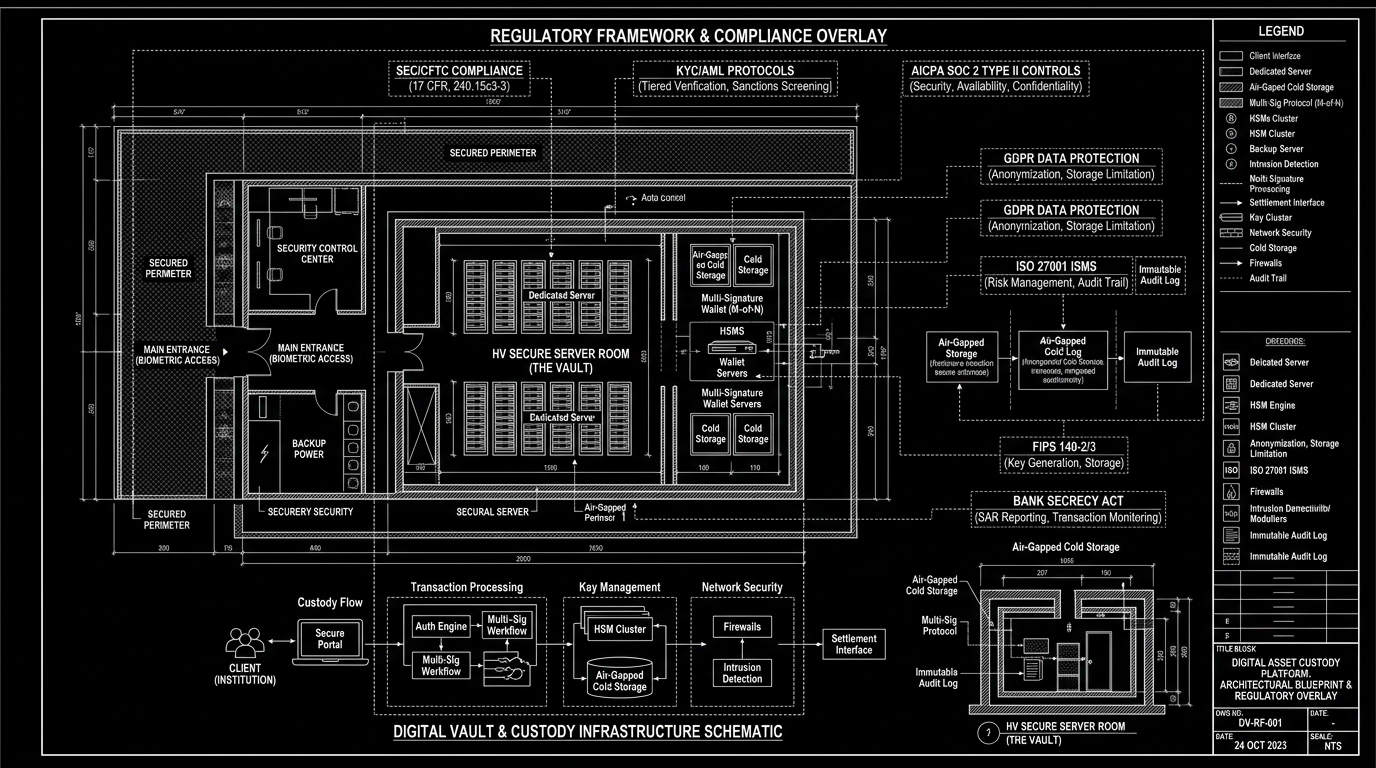
This jurisdictional friction necessitates robust legal structures. Debt originators must establish special purpose vehicles that hold the legal right to the underlying assets. These entities act as a bridge between the decentralized protocol and the traditional legal system. Institutional investors mandate transparent legal recourse before deploying capital into these pools. The speed and cost of legal enforcement directly impact the recovery rate for token holders in a default scenario.
Quantitative risk analysts must adjust their loss given default assumptions for tokenized credit. The transparency of the blockchain provides real-time visibility into payment schedules, allowing early detection of financial distress. However, the recovery process remains bound by the speed of physical courts. Firms must balance the attractive yield premium of private credit against the liquidity constraints imposed during a default event.
Institutionalizing On-Chain Lending
Tokenized private credit is a critical component of the institutional adoption of decentralized finance. It provides the high-yield, non-correlated returns required by global asset managers. As the legal infrastructure supporting real-world assets matures, the volume of corporate debt moving on-chain will accelerate. The protocols that successfully combine rigorous off-chain underwriting with efficient smart contract execution will capture the foundation of this emerging financial ecosystem.
Disclaimer: This article is for informational purposes only and does not constitute financial, investment, or trading advice. Cryptocurrencies and algorithmic trading involve significant risk of loss.