

TL;DR
- The tokenized real-world asset (RWA) market has surpassed $15 billion on-chain, with real estate representing the second-largest category after tokenized US Treasuries.
- BlackRock's BUIDL fund has catalyzed institutional adoption, demonstrating that tokenization can reduce settlement times from days to seconds while maintaining regulatory compliance.
- Regulatory frameworks remain the primary bottleneck: Securities laws in most jurisdictions treat tokenized property as securities, creating compliance complexity that limits retail accessibility.
The Rise of Tokenized Real-World Assets
Real-world asset tokenization, the process of representing ownership of physical assets as digital tokens on a blockchain, has transitioned from concept to functioning market. The total value of tokenized RWAs on public blockchains exceeded $15 billion by mid-2026, according to data aggregated by RWA.xyz and Security Token Market.
Tokenized US Treasury products dominate the RWA category, led by BlackRock's BUIDL (BlackRock USD Institutional Digital Liquidity Fund), which holds over $2 billion in assets. Franklin Templeton's BENJI and Ondo Finance's USDY are other significant Treasury tokenization vehicles. These products allow crypto-native investors to earn US Treasury yields without leaving the blockchain ecosystem.
Real estate sits as the second-largest RWA category, with approximately $3.5 billion in tokenized property on-chain. Unlike Treasury tokenization, which involves highly liquid and standardized assets, real estate tokenization contends with the inherent illiquidity, heterogeneity, and jurisdictional complexity of property markets.
How Real Estate Tokenization Works
Tokenized real estate typically follows one of two models: direct ownership tokens or debt/revenue-sharing tokens. In the direct ownership model, a property is held by a special purpose vehicle (SPV), and tokens represent fractional ownership of the SPV. Token holders receive proportional rental income and benefit from property appreciation.
In the debt model, tokens represent fractional interests in a mortgage or real estate debt instrument. Token holders receive interest payments funded by the borrower's debt service. This model is simpler from a regulatory perspective, as debt instruments have clearer securities classification than fractional property ownership.
The blockchain layer provides three distinct advantages over traditional real estate fractional ownership (such as REITs or real estate crowdfunding). First, settlement is near-instantaneous: token transfers complete in seconds rather than the days or weeks required for traditional property transactions. Second, programmability enables automated rental distribution, compliance checks, and governance through smart contracts. Third, global accessibility allows investors in any jurisdiction to access property markets that were previously limited to local participants.
Leading Platforms and Their Approaches
RealT is the largest tokenized real estate platform by number of properties, with over 1,000 tokenized rental properties across the United States, primarily in Detroit, Chicago, and other Midwest markets. Each property is held in a dedicated LLC, with tokens representing fractional LLC ownership. Token holders receive weekly rental distributions paid in USDC. RealT properties are listed on secondary markets like Uniswap, providing some liquidity, though trading volumes remain thin for most individual properties.
Lofty focuses on tokenized single-family rental homes, also primarily in the US. Lofty differentiates by offering tokens starting at $50, targeting retail investors seeking exposure to rental income. The platform handles property management, tax documentation, and legal compliance, abstracting the complexity from token holders.
Propy operates as a blockchain-based real estate transaction platform rather than a fractional ownership platform. Propy facilitates complete property transactions, including title transfer and deed recording, using smart contracts. The company has completed NFT-based property sales in Florida and other jurisdictions that have adopted blockchain-friendly recording statutes.
Centrifuge takes a different approach by tokenizing real estate debt rather than equity. The platform connects real estate lenders with DeFi liquidity pools, allowing institutional borrowers to access capital at potentially lower costs. Centrifuge's integration with MakerDAO has enabled real estate-backed loans to serve as collateral for DAI minting.
BlackRock's Tokenization Push
BlackRock's entry into asset tokenization through the BUIDL fund in March 2024 sent a powerful signal to the financial industry. CEO Larry Fink has repeatedly stated that "the tokenization of financial assets will be the next generation for markets," framing tokenization as the evolution of securitization.
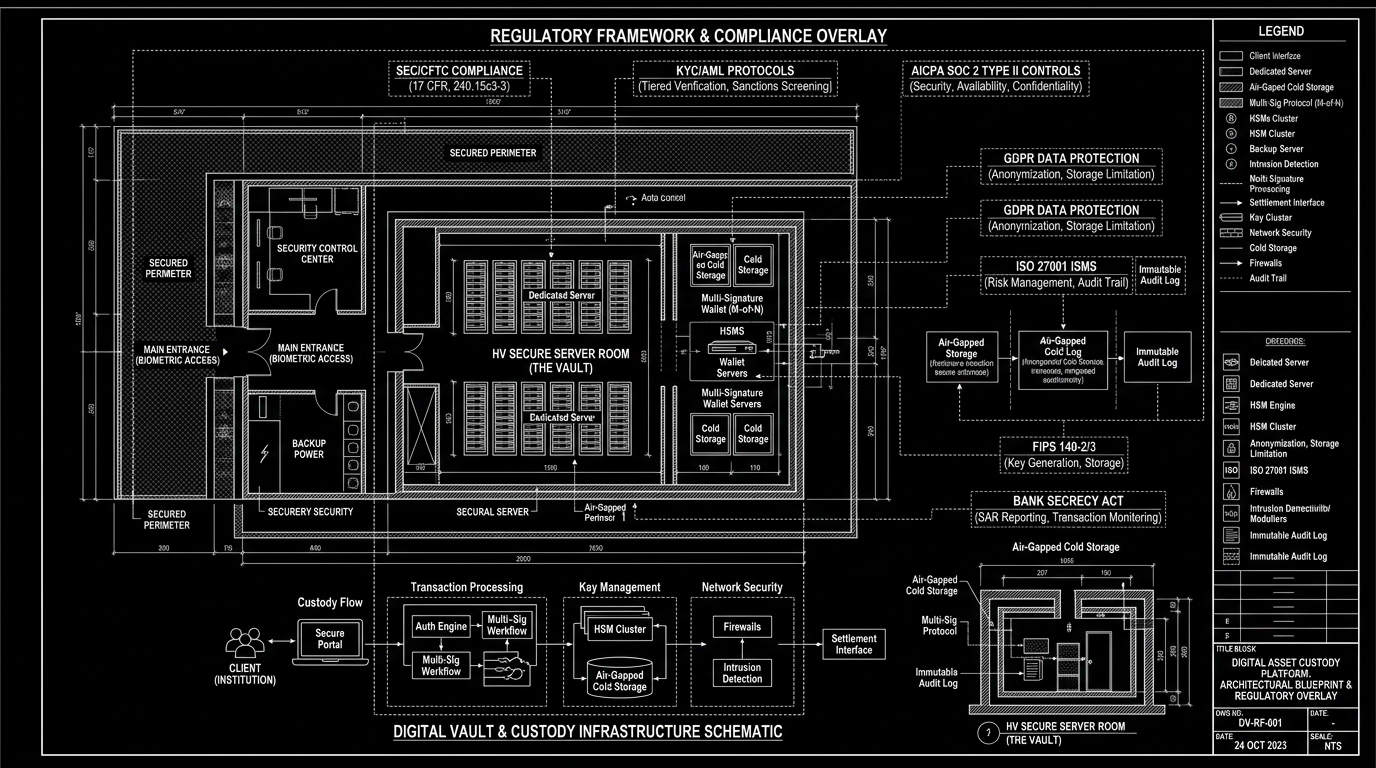
BUIDL operates on Ethereum and Polygon, offering institutional investors a tokenized money market fund that invests in US Treasury bills and repurchase agreements. The fund maintains a stable $1 per token NAV and distributes yield daily through on-chain accrual. Securitize serves as the transfer agent and compliance provider, enforcing KYC/AML requirements for all token holders.
The significance of BUIDL extends beyond its AUM. It establishes a template for how traditional asset managers can issue tokenized products within existing regulatory frameworks. BlackRock did not seek novel regulatory treatment; BUIDL is registered under existing SEC regulations, demonstrating that tokenization does not require new laws, only new technology infrastructure.
Other asset managers have followed. Franklin Templeton's tokenized fund operates on Stellar and Polygon. JPMorgan's Onyx platform has processed over $900 billion in tokenized repo transactions. Goldman Sachs' GS DAP platform tokenizes bonds and other fixed-income instruments for institutional clients.
Regulatory Frameworks and Challenges
The regulatory treatment of tokenized real estate varies significantly by jurisdiction, creating a patchwork of compliance requirements that limits cross-border investment.
In the United States, tokenized real estate interests are generally classified as securities under the Howey Test, requiring registration with the SEC or qualification under an exemption (typically Regulation D for accredited investors or Regulation A+ for broader offerings). Most tokenized real estate platforms operate under Reg D, which limits sales to accredited investors and restricts secondary trading for 12 months.
The EU's MiCA regulation does not directly address tokenized securities, which fall instead under the EU's DLT Pilot Regime. This pilot program, operational since March 2023, allows authorized entities to operate DLT-based trading and settlement systems for tokenized securities, including real estate tokens. Participation is limited, and the pilot's three-year evaluation period creates uncertainty about permanent rules.
Singapore and Switzerland have emerged as favorable jurisdictions for tokenized real estate. Switzerland's DLT Act, effective since 2021, created a legal category for tokenized securities with clear rules for issuance, trading, and custody. Singapore's Monetary Authority has approved several tokenized real estate offerings under its regulatory sandbox.
Risks Specific to Tokenized Property
Tokenized real estate carries risks beyond those of traditional property investment. Liquidity illusion is the most significant: while tokens can technically be transferred 24/7, actual secondary market trading volumes are extremely thin. Most tokenized property positions cannot be exited quickly at fair value.
Smart contract risk adds a technology layer to traditional property risk. A bug in the smart contract governing a tokenized property could result in loss of ownership records or misdirected rental payments. Multi-sig governance structures and reputable auditors mitigate but do not eliminate this risk.
Legal enforceability remains untested in many jurisdictions. If a dispute arises over tokenized property ownership, it is unclear how courts in many countries would treat blockchain records versus traditional title registries. Until case law develops, this ambiguity represents a meaningful legal risk.
Counterparty risk exists at the SPV and property management level. Token holders depend on the platform operator to manage properties, distribute income, and maintain legal compliance. If a platform fails, token holders may face a lengthy and expensive legal process to assert their ownership rights.
Strategic Outlook for the Future
Tokenized real estate offers genuine innovation in how property investment is accessed, settled, and managed. The combination of fractional ownership, automated income distribution, and global accessibility addresses longstanding inefficiencies in real estate markets.
However, the sector remains early-stage. Liquidity is limited, regulatory frameworks are evolving, and the track record of tokenized property platforms is short. Investors should treat tokenized real estate as a speculative allocation within a broader portfolio, not as a substitute for traditional REIT or direct property exposure.
The most promising near-term opportunity lies in tokenized real estate debt rather than equity. Debt instruments have clearer legal classifications, more predictable cash flows, and simpler secondary market dynamics. As regulatory clarity improves and institutional infrastructure matures, the equity side of tokenized real estate should become increasingly viable.
What is the main focus of Tokenized Real Estate: Where Crypto Meets Property?
Tokenized real estate is bridging blockchain and property markets. Analysis of market size, leading platforms, regulatory frameworks, and institutional adoption.
How does this impact the market?
Market dynamics are heavily influenced by these trends, leading to shifts in investment strategies.
Where can I learn more?
Keep an eye on our latest updates and industry reports for deeper insights.
Disclaimer: This article is for informational purposes only and does not constitute financial advice. Always consult a qualified financial advisor before making investment decisions.
Final Thoughts on Institutional Flows
Understanding these underlying trends is only the first step. To operationalize these findings, check our latest algorithmic backtests.