
Autonomous Trucking Reaches Critical Mass in US Logistics
The US logistics industry is undergoing a seismic shift. For years, the promise of self-driving freight has hovered on the horizon as a futuristic concept. However, recent advancements in artificial intelligence (AI) and sensor technology have accelerated this timeline. Autonomous trucking has officially reached critical mass in US logistics, promising to reshape the economic landscape of the supply chain.
The State of Self-Driving Freight in the US
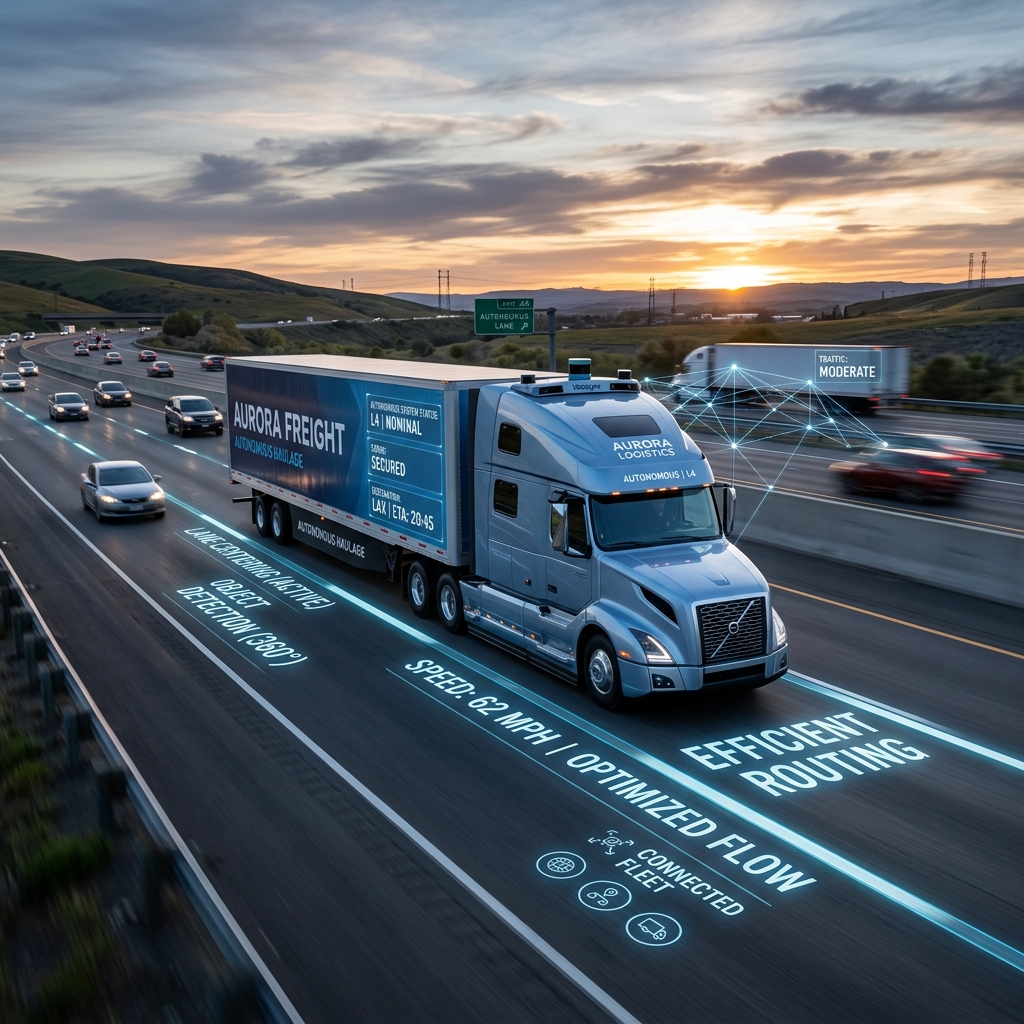
The transition from human-driven trucks to autonomous fleets is no longer just theoretical. Major tech companies and traditional automotive manufacturers have successfully deployed Level 4 autonomous trucks - vehicles capable of performing all driving functions under certain conditions - on key freight corridors, particularly in the Sun Belt.
This critical mass has been achieved through millions of miles of simulated and real-world testing. Favorable regulatory environments in states like Texas and Arizona have provided the necessary testing grounds, allowing companies to refine their algorithms and prove the safety of their systems.
The Economic Impact on the Supply Chain
The economic implications of integrating autonomous trucking into the supply chain are profound. Here is how self-driving freight is transforming logistics:
1. Significant Cost Reduction
Labor is one of the most substantial expenses in the trucking industry. Autonomous trucks can operate without the restrictions of Hours of Service (HOS) regulations, which limit human drivers to 11 hours of driving per day. Self-driving freight can move 24/7, effectively doubling the utilization of a single truck and drastically reducing the cost per mile.
2. Addressing the Driver Shortage
The US has faced a persistent shortage of qualified truck drivers, leading to supply chain bottlenecks and increased shipping costs. Autonomous trucking provides a technological solution to this labor crisis, ensuring a steady flow of goods without relying solely on a diminishing workforce.
3. Fuel Efficiency and Sustainability
AI-driven systems are optimized for fuel efficiency. They can calculate the most efficient routes, maintain optimal cruising speeds, and execute smooth braking and acceleration. This not only reduces fuel costs but also lowers the carbon footprint of freight transportation, aligning with global sustainability goals.
AI's Role in Autonomous Trucking
At the heart of this revolution is Artificial Intelligence. The AI algorithms powering these trucks rely on a complex web of technologies:
- Machine Learning & Computer Vision: Allowing trucks to interpret data from LiDAR, radar, and cameras in real-time to identify objects, read signs, and predict the behavior of other vehicles.
- Sensor Fusion: Combining data from multiple sensors to create a comprehensive 360-degree view of the truck's surroundings, regardless of weather or lighting conditions.
- Predictive Maintenance: AI systems monitor the truck's mechanical health, predicting component failures before they occur and minimizing downtime.
Challenges and the Road Ahead
Despite reaching this critical milestone, the widespread adoption of autonomous trucking faces hurdles. Public perception regarding the safety of 80,000-pound robotic vehicles remains a significant barrier. Additionally, national infrastructure needs upgrading to better support autonomous navigation, and federal regulations must catch up to the technology to create a unified legal framework across all 50 states.
There are also valid concerns regarding job displacement. While autonomous trucks will handle long-haul highway routes, the "middle and last mile" delivery will likely remain dependent on human drivers, shifting the nature of logistics employment rather than eliminating it entirely.
Conclusion
Autonomous trucking reaching critical mass is a watershed moment for US logistics. The economic impact of self-driving freight on the supply chain will be characterized by unprecedented efficiency, cost savings, and a fundamental restructuring of how goods are moved. As AI technology continues to mature, the supply chain of the future is not just arriving - it is already on the road.