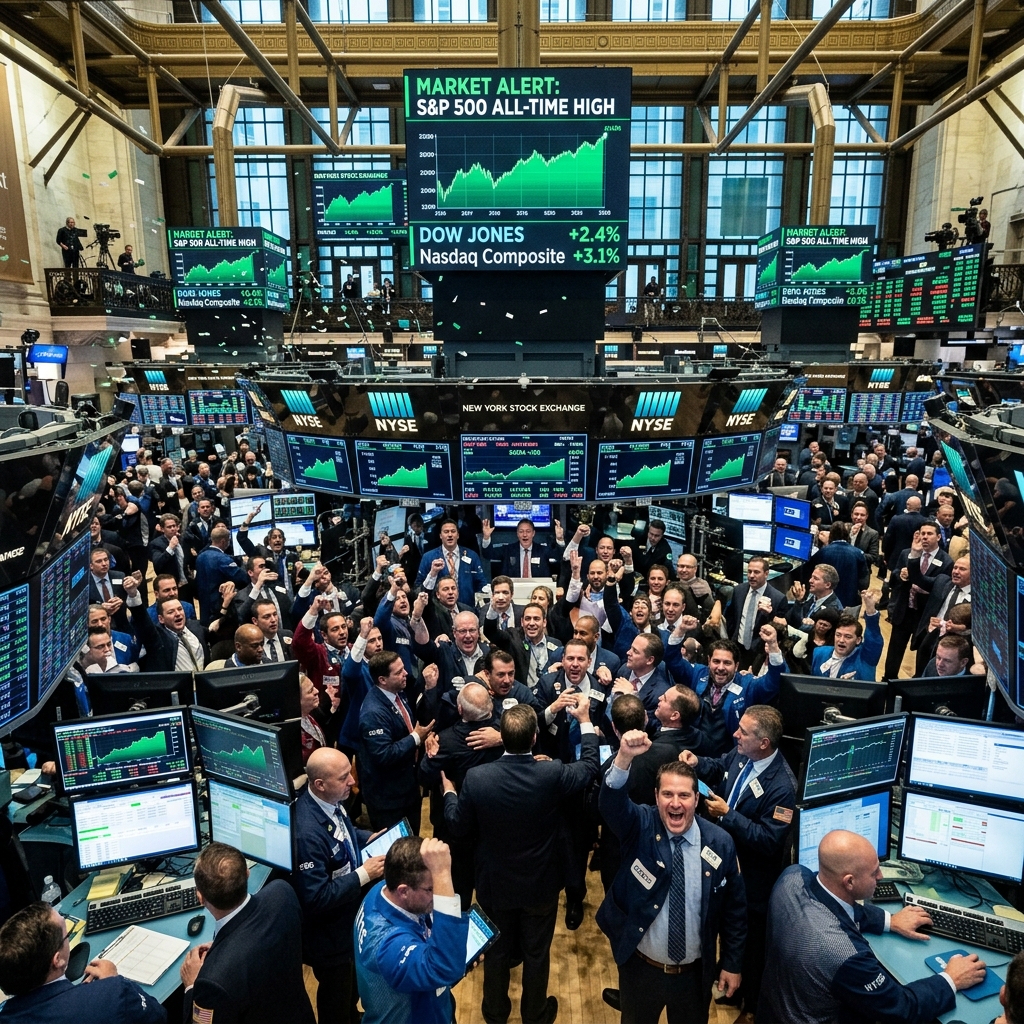

The stock market reached unprecedented heights on Tuesday as the S&P 500 Index closed at a new all-time high, driven by an aggressive rally in the technology sector. The broader market upswing comes amid mounting speculation that the Federal Reserve is preparing to initiate its first interest rate cut in over a year, shifting investor sentiment decisively back toward growth equities and risk-on assets.
Tech Giants Lead the Market Charge
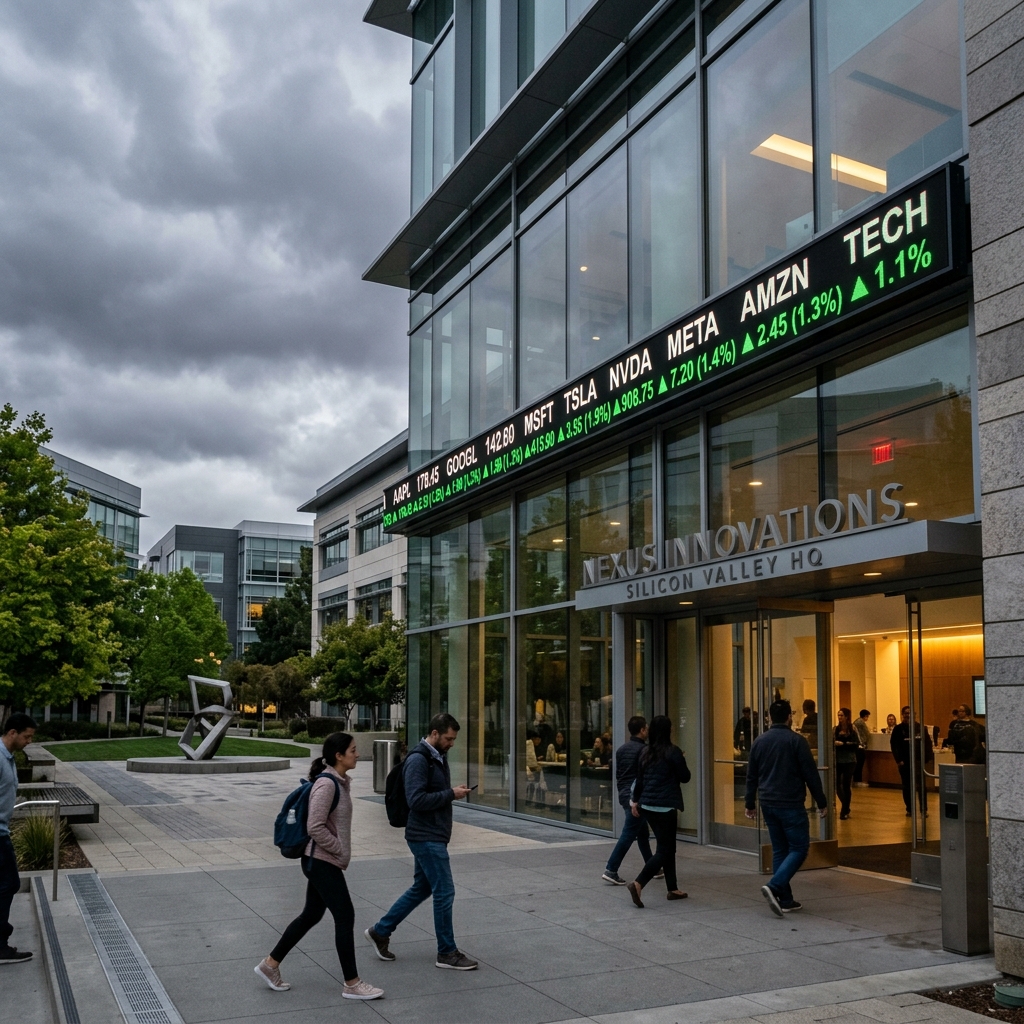
Technology stocks, which are historically highly sensitive to borrowing costs, led the charge across all major indices. The tech-heavy Nasdaq Composite surged more than 2%, significantly outperforming the broader market averages, while the S&P 500 Information Technology sector posted its strongest single-day performance of the current quarter. Institutional and retail investors alike heavily favored megacap technology firms, which have consistently demonstrated resilient earnings, robust cash flows, and strong forward guidance despite lingering macroeconomic uncertainty.
Semiconductor manufacturers, artificial intelligence developers, and enterprise software providers saw the most significant capital inflows. The prospect of lower interest rates has reignited institutional appetite for capital-intensive growth companies. Reduced borrowing costs generally increase the present value of future corporate earnings, making high-growth tech valuations more palatable. Analysts at major Wall Street banks note that while the tech sector has historically traded at a premium, the anticipated shift in monetary policy provides a strong fundamental justification for sustaining current earnings multiples.
Federal Reserve Policy in Focus
The primary catalyst for the current rally stems from recently published economic data suggesting a steadily cooling labor market and stabilizing consumer prices. These key macroeconomic indicators have convinced bond markets that inflation is finally on a sustainable path toward the Federal Reserve’s stated 2% target, giving policymakers the leeway needed to ease restrictive monetary conditions.
Fed Fund futures now price in a near-certainty of a minimum 25-basis-point rate reduction at the upcoming Federal Open Market Committee (FOMC) meeting. This dovish repricing in the bond market has led to a noticeable decline in Treasury yields across the curve. Crucially, the benchmark 10-year yield has retreated from its recent highs, making equities an increasingly attractive asset class relative to fixed income.
Market Breadth Shows Healthy Improvement
While the technology sector commanded the spotlight, the rally exhibited healthy underlying market breadth. Financials, consumer discretionary, and industrial stocks also recorded notable gains, suggesting that the bullish sentiment extends well beyond a handful of prominent megacap names. The Russell 2000, which tracks small-cap equities and often serves as a barometer for domestic economic health, advanced alongside large-cap indices. This broader participation indicates widespread confidence that a "soft landing" for the U.S. economy remains an achievable outcome.
Looking Ahead: Volatility and Valuation Concerns
Despite the palpable euphoria surrounding the record highs, institutional strategists continue to urge cautious optimism. The market has largely priced in the impending rate cuts, meaning any unexpected hawkish rhetoric from Federal Reserve officials or upside surprises in inflation data could trigger swift and severe market pullbacks. Furthermore, valuation metrics for the broader S&P 500 are rapidly approaching the upper bounds of their historical averages, leaving little margin for error during the upcoming corporate earnings season.
In the weeks ahead, investors will be closely monitoring upcoming Consumer Price Index (CPI) prints and non-farm payroll reports, which will serve as the final data points for the central bank’s policy trajectory. For now, however, Wall Street remains resolute in its conviction that a lower, more accommodating interest rate environment is on the immediate horizon, providing a robust and enduring tailwind for both technology stocks and the broader equities market.