
South Korea's Massive $550 Billion Semiconductor Bet
In an unprecedented move designed to alleviate the mounting global memory shortage - colloquially dubbed "RAMageddon" - South Korean technology giants have pledged an extraordinary $550 billion toward expanding their semiconductor manufacturing capabilities. This colossal investment underscores the nation's aggressive strategy to cement its status as a preeminent powerhouse in the artificial intelligence (AI) era.
As AI models become increasingly sophisticated, the demand for high-bandwidth memory (HBM) and next-generation DRAM has skyrocketed, outpacing current global supply chains. South Korea, home to the world's leading memory chip producers, is stepping up to bridge this critical gap, ensuring the technological revolution continues unhindered by hardware constraints.
Expanding Fabrication Capabilities
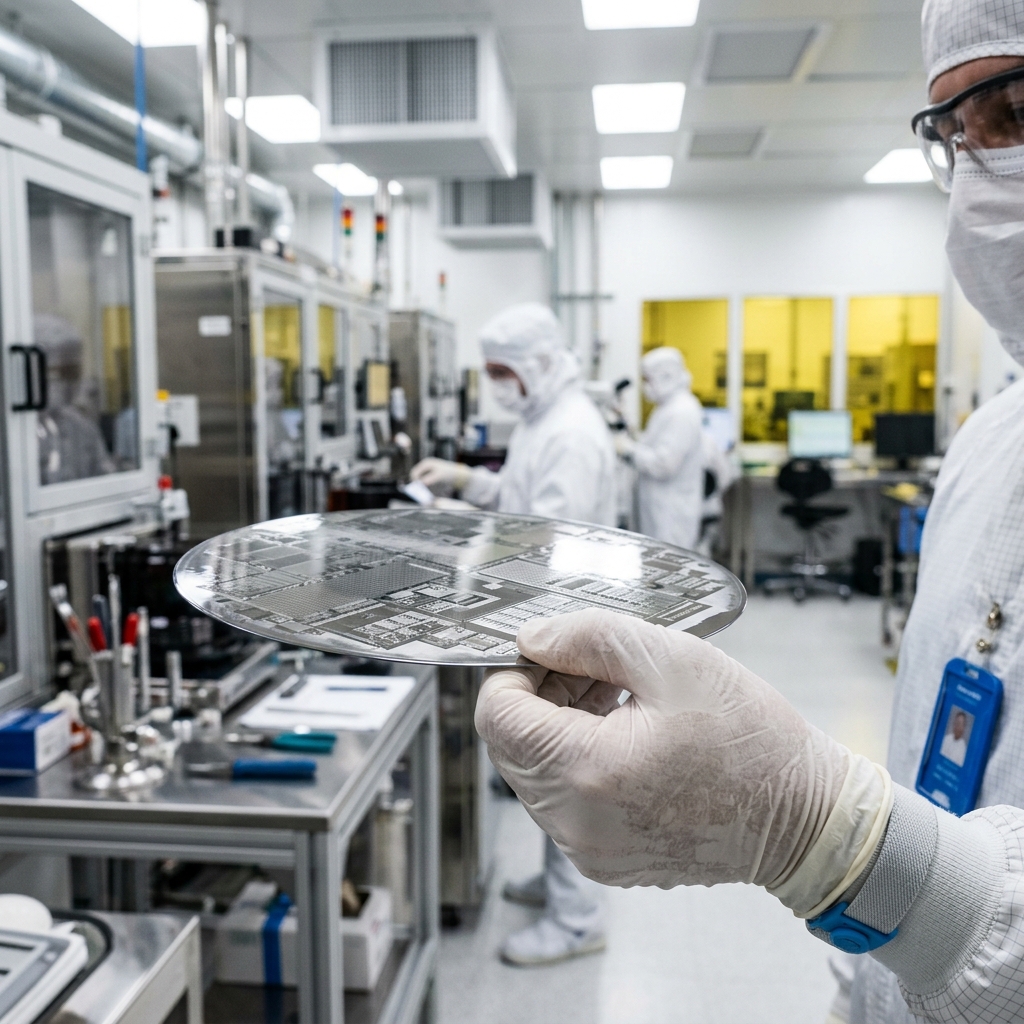
To address the insatiable appetite for advanced memory solutions, South Korea is focusing heavily on infrastructural expansion. The $550 billion commitment will be strategically deployed over the coming years to establish state-of-the-art fabrication facilities, or "fabs," capable of producing cutting-edge memory components.
Samsung and SK Hynix Lead the Charge
At the forefront of this monumental initiative are Samsung Electronics and SK Hynix - the world's two largest memory chip manufacturers. Together, they dominate a significant portion of the global memory market. By heavily investing in new mega-fabs and research laboratories, these industry titans aim to accelerate the mass production of high-density memory chips essential for running complex AI algorithms and large language models.
The expansion will not only increase raw manufacturing volume but also foster innovation in memory architecture. Enhanced research and development efforts will focus on improving energy efficiency, reducing latency, and maximizing data throughput - all critical factors for the next generation of cloud computing and enterprise AI deployment.
Positioning South Korea as an AI Powerhouse
Beyond merely mitigating the current supply-demand imbalance, this investment serves a broader geopolitical and economic purpose. South Korea is systematically positioning itself as the indispensable bedrock of global AI development.
Geopolitical and Economic Implications
In a landscape where technological supremacy equates to national security and economic resilience, dominating the semiconductor supply chain is vital. By controlling the primary nodes of memory chip production, South Korea diminishes global reliance on fractured supply networks and fortifies its diplomatic leverage.
The initiative is heavily supported by the South Korean government, which has introduced a slew of tax incentives, infrastructural subsidies, and streamlined regulatory frameworks to facilitate rapid fab construction. This public-private synergy highlights a unified national vision to capture and retain the lion's share of the booming AI hardware market.
Looking Ahead: The Future of Global Tech Supply
The $550 billion capital injection by South Korean giants offers a crucial lifeline to an industry grappling with the realities of RAMageddon. While the construction of new fabs is a multi-year endeavor, the sheer scale of this commitment sends a strong stabilizing signal to global markets.
As the world edges closer to a fully AI-integrated future, the foundational hardware required to support such advancements will only grow in importance. South Korea’s proactive and massive investment ensures that when the next wave of technological innovation arrives, the memory necessary to power it will be ready and waiting.