
The Democratization of Algorithmic Trading
For decades, quantitative trading was the exclusive domain of Wall Street's most sophisticated institutional players. Hedge funds and proprietary trading firms leveraged massive computational power, armies of PhD-level analysts, and co-located servers to execute high-frequency strategies. Today, a profound shift is occurring within the financial ecosystem: algorithmic trading is rapidly permeating the retail investment landscape.
This democratization is driven by a confluence of technological advancements and a growing appetite among retail investors for sophisticated, data-driven strategies. As the gap between institutional and retail capabilities narrows, algo finance is emerging as a formidable force in the broader stock market.
Breaking Down the Barriers to Entry
Historically, the barriers to entry for retail quantitative trading were insurmountable. The prohibitive cost of institutional-grade market data, the necessity for advanced programming acumen, and the lack of accessible trading infrastructure sidelined everyday investors. However, the advent of cloud computing and open-source software has fundamentally altered this dynamic.
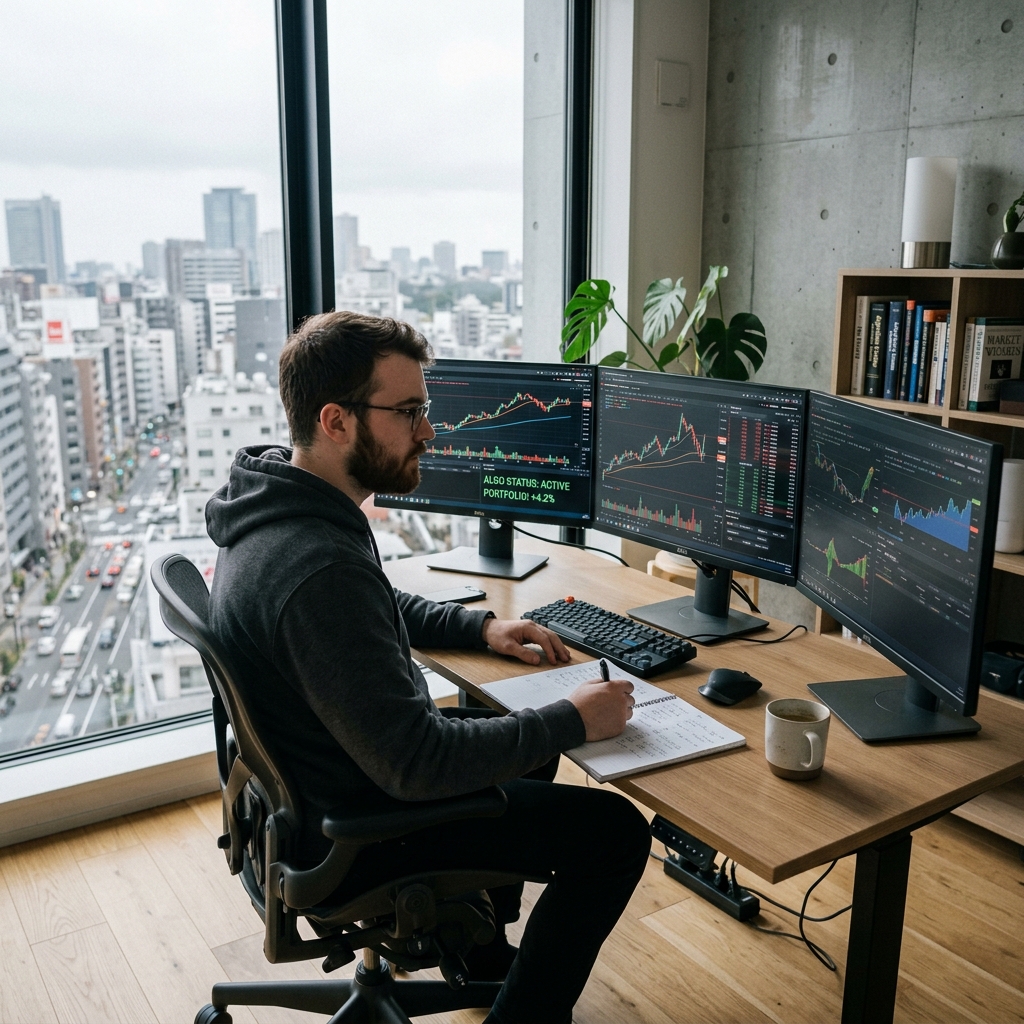
Retail investors now have access to high-quality, real-time, and historical market data through affordable API integrations. Open-source libraries in languages like Python - such as Pandas, NumPy, and specialized backtesting frameworks - have standardized the tools required for financial modeling. Consequently, developing and testing robust trading algorithms is no longer a multi-million-dollar endeavor.
The Role of No-Code and Low-Code Platforms
Beyond the proliferation of coding resources, the rise of no-code and low-code algorithmic trading platforms has catalyzed this retail revolution. These platforms offer intuitive, drag-and-drop interfaces that allow traders to build, backtest, and deploy complex strategies without writing a single line of code. By abstracting the technical complexities, these environments empower traders to focus entirely on strategy formulation and market analysis, significantly widening the funnel of retail participants in the algorithmic space.
How Retail Quants Are Leveling the Playing Field
As algorithmic trading becomes more accessible, retail "quants" are leveraging these tools to mitigate traditional disadvantages and compete more effectively in the stock market.
Data-Driven Decision Making
Human trading is inherently susceptible to cognitive biases and emotional reactions, which often lead to suboptimal execution, especially during periods of high market volatility. Algorithmic trading eradicates this emotional friction. By relying on pre-defined, rigorously backtested rules, retail algos execute trades based purely on statistical probabilities and quantitative signals. This shift toward systematic, data-driven decision-making allows retail investors to capitalize on fleeting market inefficiencies that manual trading simply cannot capture.
Managing Risk and Emotion
Effective risk management is the bedrock of sustained profitability in trading. Algorithms excel in this arena by enforcing strict risk parameters, such as dynamic stop-loss orders, position sizing based on portfolio volatility, and automated diversification strategies. When the market experiences a sudden downturn, an algorithm acts decisively to protect capital according to its programming, bypassing the panic or hesitation that often plagues discretionary traders.
The Future of Retail Algo Finance
The integration of artificial intelligence and machine learning is poised to be the next frontier for retail algorithmic trading. As these technologies become more integrated into retail platforms, the ability to deploy adaptive algorithms that learn from incoming market data will further blur the lines between retail and institutional capabilities.
The rise of quantitative trading in retail markets is not merely a passing trend; it is a structural evolution of the stock market. As technology continues to democratize access to sophisticated financial instruments, everyday investors are increasingly equipped to navigate the complexities of modern finance. Algo finance is empowering a new generation of traders, ensuring that data and discipline, rather than intuition alone, drive the future of retail investing.