

TL;DR
- $2.5 Billion Lost: Historic exploits on bridges like Ronin, Wormhole, and Nomad resulted in a staggering $2.5 billion in stolen funds.
- $154B in Illicit Volume: Chainalysis reports record illicit crypto volumes globally, with cross-chain bridges frequently used by state-sponsored actors for laundering.
- New Architectures: The industry is pivoting to ZK-proofs and decentralized multi-oracle models to secure billions in cross-chain liquidity.
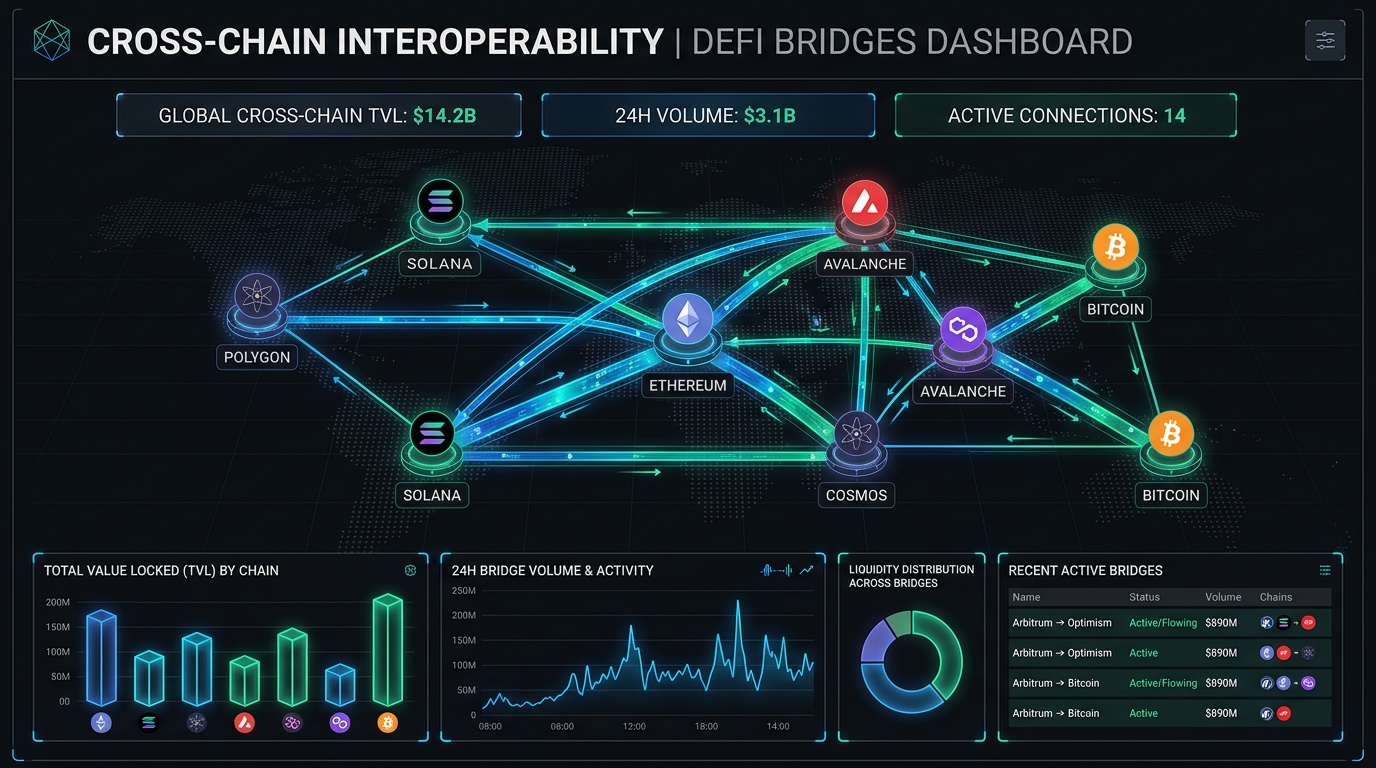
Cross-chain bridges are the critical infrastructure of the multi-chain DeFi ecosystem, enabling users to transfer assets and data between disparate blockchain networks. However, this interoperability has come at a massive cost. Over the past few years, bridges have been the target of some of the largest heists in digital asset history, with protocols like Ronin, Wormhole, and Nomad collectively losing roughly $2.5 billion. As we navigate 2026, the pressing question is whether the technology has matured enough to be considered safe.
Bridges exist because blockchains, by design, are isolated silos. To move liquidity from Ethereum to Solana, or to a Layer 2 network like Arbitrum, users rely on smart contracts that lock assets on one chain and mint equivalent representative tokens on another. This honeypot of locked liquidity makes bridges incredibly lucrative targets for sophisticated hackers, including state-sponsored entities.
Anatomy of the Catastrophic Exploits
Understanding the current security landscape requires a look back at the post-mortems of these massive exploits. The Ronin Network hack, which cost over $600 million, was primarily an operational security failure; attackers compromised the private keys of a majority of the network's validator nodes, allowing them to authorize fake withdrawals.
In contrast, the Wormhole exploit ($320 million) and the Nomad bridge drain ($190 million) were rooted in smart contract vulnerabilities. Wormhole suffered from a signature verification bug that allowed the attacker to forge a valid signature and mint unbacked tokens. Nomad experienced a catastrophic configuration error during an upgrade, which effectively allowed anyone to replicate an exploit transaction and drain the bridge's reserves in a chaotic free-for-all.
| Exploit | Year | Amount Stolen | Primary Attack Vector |
|---|---|---|---|
| Ronin Network | 2022 | ~$625 Million | Compromised Validator Private Keys |
| Poly Network | 2021 | ~$611 Million | Smart Contract Access Control Flaw |
| Wormhole | 2022 | ~$320 Million | Smart Contract Signature Verification Bug |
| Nomad | 2022 | ~$190 Million | Smart Contract Configuration Error |
Modern Bridge Architectures and Risk Tiering
In response to these catastrophic losses, the architecture of cross-chain bridges has evolved significantly by 2026. L2Beat and other security rating agencies now heavily scrutinize the trust assumptions of these protocols. We are seeing a move away from centralized multi-sig setups toward trust-minimized solutions.
Zero-Knowledge (ZK) bridges and protocols leveraging the Inter-Blockchain Communication (IBC) standard are gaining traction. These architectures rely on cryptographic proofs and light client validation rather than trusted third parties, significantly reducing the attack surface. Furthermore, platforms are adopting modular security, utilizing multi-oracle networks like LayerZero combined with institutional-grade bug bounty programs (as tracked by Immunefi) to catch vulnerabilities before they are exploited.
The Residual Risks
While the underlying technology has undoubtedly improved, cross-chain bridging remains a high-risk activity. The complexity of smart contracts means that zero-day vulnerabilities are always a possibility. Furthermore, the sheer volume of illicit funds moving through the ecosystem - highlighted by Chainalysis reports tracking record money laundering activities - means bridges will remain prime targets.
For users seeking to navigate this landscape, understanding the risk tiers is crucial. Sticking to canonical bridges for Layer 2s or engaging with heavily audited, trust-minimized protocols is safer than interacting with nascent, high-yield cross-chain applications. The evolution of DeFi depends on secure interoperability, and as tokenized US Treasuries and other real-world assets move on-chain, the stakes for bridge security have never been higher.
Disclaimer: This article is for informational purposes only. Cryptocurrency investments and DeFi protocols carry extreme risks, including the potential loss of all funds.