
TL;DR
- High-frequency trading firms push execution speeds deep into the nanosecond regime using specialized hardware.
- The debate between FPGA and GPU acceleration dominates modern market making infrastructure design.
- Co-location costs continue to surge as exchanges monetize proximity to matching engines.
- Pure speed advantages offer diminishing alpha, forcing a pivot toward complex AI-driven predictive modeling.
Related Insight: Green Data Centers: The ESG Investment Angle
Pushing the Boundaries of Physics
The high-frequency trading industry operates at the absolute limits of physical capability. In 2026, the latency arms race no longer measures success in milliseconds or even microseconds. Elite proprietary trading firms measure order execution speeds in tens of nanoseconds. This relentless pursuit of speed requires firms to optimize every component of their hardware stack. From custom network interface cards to specialized fiber-optic transceivers, infrastructure engineers strip away any process that adds microscopic delays.
Latency arbitrage relies on detecting price discrepancies across multiple trading venues before competitors react. When an ETF price updates on a primary exchange, a latency arbitrageur races to buy the underlying constituent stocks on secondary exchanges. The firm with the fastest data ingestion and order routing infrastructure captures the spread. This zero-sum competition creates a winner-take-all dynamic in the most liquid asset classes. Consequently, firms spend hundreds of millions of dollars annually just to maintain their position in the speed hierarchy.
The FPGA vs GPU Execution Debate
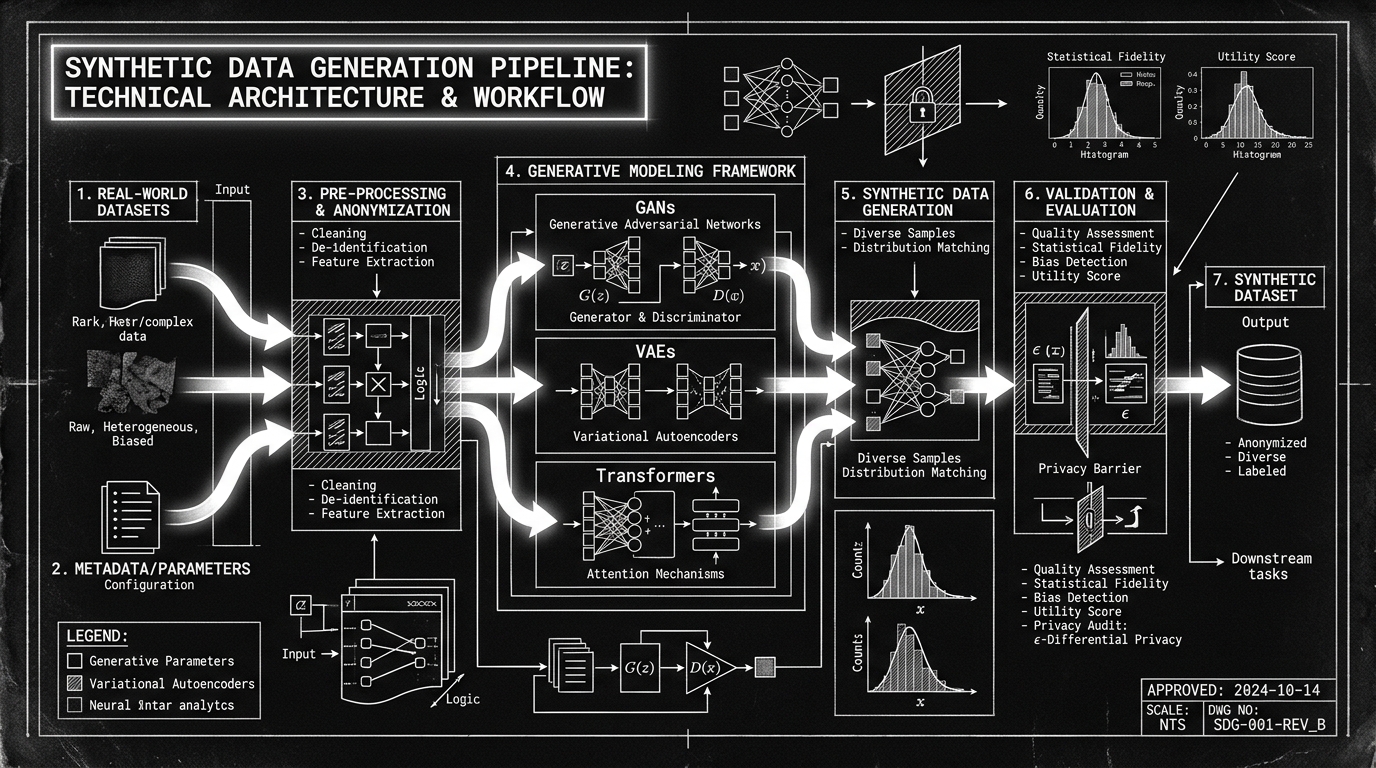
The architecture of modern trading engines centers on a fierce debate between Field-Programmable Gate Arrays and Graphics Processing Units. FPGAs process network packets directly at the silicon level. By completely bypassing the server's operating system, FPGAs provide deterministic execution times. Trading logic baked directly into hardware guarantees that an order fires exactly 40 nanoseconds after a trigger event. For pure latency arbitrage, FPGAs remain the undisputed standard.
However, the rise of complex machine learning models in algorithmic trading complicates this hardware equation. FPGAs struggle to execute large-scale neural networks efficiently. GPUs excel at the parallel processing required by deep learning models, but they introduce higher baseline latency. Quantitative funds must choose between the absolute speed of an FPGA and the sophisticated predictive power of a GPU. Many advanced firms now deploy hybrid architectures. They use GPUs to update risk parameters and pricing models asynchronously while FPGAs handle the immediate, low-latency execution of individual orders.
The Surging Costs of Co-Location
Proximity to exchange matching engines dictates market making success. Trading firms rent server space directly inside exchange data centers to minimize the physical distance data must travel. The speed of light through fiber optic cables is finite. An extra ten meters of cable translates to a measurable latency disadvantage. Exchanges recognize the inelastic demand for premium rack space and price their co-location services accordingly.
Co-location fees represent a massive barrier to entry for new quantitative funds. A top-tier rack setup at a major New Jersey data center costs millions of dollars per year. Exchanges also charge premium fees for direct data feeds and high-bandwidth cross-connects. These infrastructure costs concentrate market share among a handful of well-capitalized proprietary trading firms. Smaller algorithmic funds cannot compete in latency-sensitive strategies and must pursue longer-term, capacity-constrained alpha generation techniques.
Diminishing Returns on Pure Speed
Despite massive infrastructure investments, the alpha generated by pure latency arbitrage is shrinking. The difference between the fastest firm and the second-fastest firm has narrowed to single-digit nanoseconds. At this scale, jitter in exchange matching engines often negates the hardware advantage. When multiple firms send orders simultaneously, network switches queue the packets unpredictably. Winning a race now involves a significant element of pure chance.
Trading firms recognize these diminishing returns. The strategic focus is shifting from simply being the fastest to being the smartest. Quants integrate predictive AI models into their ultra-low latency pipelines. Instead of reacting to an event after it happens, these systems attempt to predict the event microseconds before it occurs. A slightly slower execution engine driven by superior predictive logic consistently outperforms a faster, purely reactive system.
The Ongoing Regulatory Debate
Regulators continuously evaluate the impact of latency arbitrage on overall market quality. Critics argue that ultra-fast arbitrageurs extract a hidden tax from institutional investors. By picking off stale limit orders, high-frequency firms increase execution costs for pension funds and mutual funds. Some exchanges implemented speed bumps to neutralize latency advantages and protect institutional order flow. These randomized delays aim to level the playing field between ultra-fast firms and traditional market participants.
Proponents of high-frequency trading argue that these firms provide essential liquidity and tighten bid-ask spreads. They maintain that the aggressive competition among market makers benefits all investors through reduced transaction costs. The Securities and Exchange Commission attempts to balance these competing perspectives. Regulatory proposals in 2026 focus on increasing transparency around co-location access and direct feed pricing rather than banning latency-sensitive strategies entirely.
Disclaimer: The information provided in this article is for educational and informational purposes only and does not constitute financial, investment, or trading advice. Algorithmic trading and the use of AI in finance involve significant risks. Readers should consult with a qualified financial advisor before making any investment decisions.