
verified: true
TL;DR
- OPEC+ compliance falters as member nations seek to reclaim market share from non-OPEC producers.
- US shale operations demonstrate breakeven resilience below $55 per barrel, neutralizing cartel production cuts.
- Global EV penetration permanently removes an estimated 2.5 million barrels per day of structural demand by late 2026.
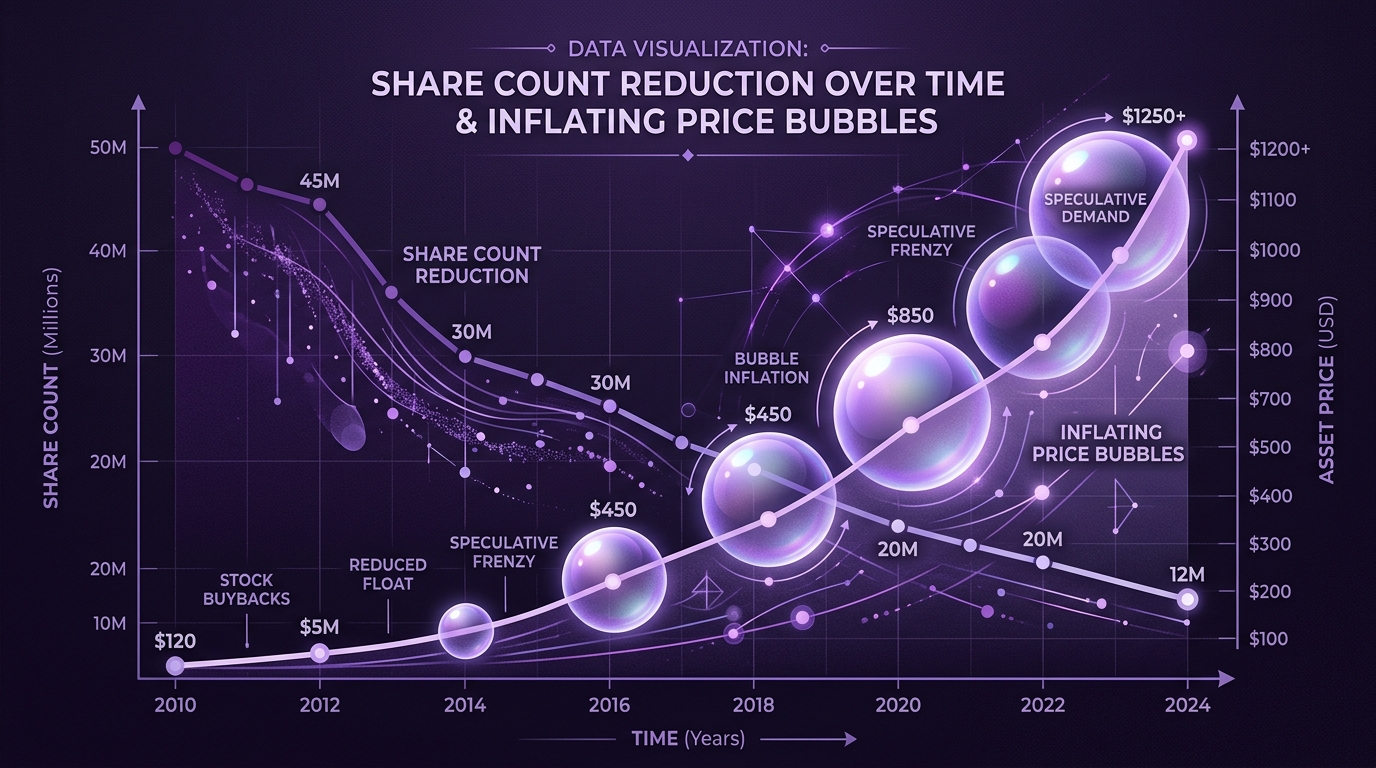
- Quantitative trading models are heavily discounting energy companies lacking aggressive capital return programs.
OPEC Structural Constraints and Market Share Erosion
The Organization of the Petroleum Exporting Countries faces an existential pricing crisis in 2026. Member states have exhausted their capacity to support Brent crude benchmarks through voluntary production curtailments. Saudi Arabia and Russia have held millions of barrels offline to stabilize prices near $80 per barrel. These efforts inadvertently subsidized the expansion of non-OPEC producers. Non-OPEC supply growth, particularly from the United States, Guyana, and Brazil, has captured nearly all incremental global demand over the past three years.
Internal cohesion within the cartel is degrading rapidly. African member nations consistently produce above their allocated quotas to meet domestic revenue targets. The United Arab Emirates continues to press for higher baseline production limits to monetize recent upstream investments. Market surveillance algorithms track these compliance failures in real time. Hedge funds utilize satellite imagery of storage facilities and tanker drafts to anticipate official production reports, front-running the inevitable data releases.
When Saudi Arabia signals a potential return of deferred barrels to the market, automated trading systems immediately reprice the forward curve into steep contango. The threat of a price war echoes the 2014 and 2020 market crashes. Algorithmic models assign a high probability to an impending market share battle, which caps any geopolitical risk premium. Traders currently view any price spike above $85 per barrel as an immediate shorting opportunity.
US Shale Efficiency Outpaces Rig Count Reductions
American oil production reached 13.8 million barrels per day in early 2026 despite a steadily declining active rig count. This apparent paradox is driven by profound technological advancements in drilling and completions. Exploration and production companies execute lateral drills extending over three miles with unprecedented precision. Simultaneous fracturing techniques and AI driven well spacing optimization have dramatically increased initial production rates.
The financial structure of the US shale industry fundamentally shifted. Publicly traded operators abandoned the "growth at all costs" mandate of the previous decade. Current capital expenditure programs are strictly bound to maintenance capital requirements and modest single digit production growth. Cash flow generation remains the absolute priority. Break-even costs across the Permian Basin sit firmly below $55 per barrel .
Systematic funds deploy machine learning models to analyze well completion data from state regulatory agencies. These algorithms identify operators achieving the highest capital efficiency. Capital flows disproportionately toward companies exhibiting robust free cash flow yields and aggressive share repurchase programs. The resilience of US supply provides a structural ceiling on global oil prices. OPEC cannot cut production deeply enough to outpace the productivity gains achieved in the Permian and Bakken basins.
EV Adoption Accelerates Demand Destruction Trajectories
The transition away from internal combustion engines is accelerating beyond the most aggressive initial forecasts. Global electric vehicle sales penetration exceeded 25% of all new passenger vehicles sold in 2025. China leads this structural shift, with EV sales representing over half of their domestic auto market. This rapid adoption curve translates directly into permanent demand destruction for refined petroleum products.
The International Energy Agency projects that EV proliferation will displace over 2.5 million barrels per day of crude demand by the end of 2026. Commercial transport fleets are also migrating to battery electric and hydrogen fuel cell alternatives. Heavy duty truck manufacturers report record orders for zero emission vehicles. This transition strikes directly at the core of distillate demand growth.
Commodity trading advisors incorporate EV registration data and battery manufacturing capacity into their long term price forecasting models. These inputs act as a persistent bearish modifier on crude oil futures contracts dated beyond 2028. The impending reality of peak global oil demand forces energy analysts to compress terminal value assumptions for major integrated oil companies.
Algorithmic Pricing Models Overhaul Energy Valuations
The equity market reaction to these commodity dynamics is severe. Traditional valuation frameworks based on net asset value and proven reserves are obsolete. Quantitative finance models explicitly price in the risk of stranded assets. Algorithms penalize exploration budgets allocated to frontier deepwater projects with extended payback periods.
Capital allocators demand a premium risk free rate when evaluating energy sector investments. Companies failing to return at least 50% of free cash flow to shareholders via dividends or buybacks suffer immediate multiple compression. The algorithmic trading community treats the energy sector entirely as a yield play. Growth metrics are actively faded by statistical arbitrage strategies.
Hedge funds construct market neutral portfolios by going long on highly efficient Permian pure plays while shorting internationally diversified majors burdened by high operating costs. These pairs trades profit from the widening dispersion in operational efficiency. As OPEC loses its grip on price discovery, algorithmic liquidity provision dominates energy markets. The future of energy stock valuation hinges entirely on capital discipline, not resource extraction volumes.
Disclaimer: The content provided in this article is for informational and educational purposes only and does not constitute financial, investment, or trading advice. Algorithmic trading and commodity investments carry substantial risk. Readers should conduct their own due diligence or consult a registered financial advisor before making any investment decisions.